
Why Do We Need To File ISF For Cargo?
So, you’re probably wondering why on earth you need to go through the hassle of filing an ISF for your cargo, right? Well, let me break it down for you. In this article, we’re going to explore the importance of filing an ISF (Importer Security Filing) for your cargo and why it’s a crucial step in ensuring smooth and secure transit of goods across international borders. Trust me, you don’t want to skip this step, so let’s get into it!

What is ISF?
ISF stands for Importer Security Filing, also known as 10+2, and it is a mandatory requirement introduced by U.S. Customs and Border Protection (CBP) for all ocean cargo shipments entering the United States. The purpose of ISF is to enhance the security of the supply chain by providing advance information about the cargo being imported.
Legal Requirement for ISF
Security Measures
The implementation of ISF is crucial for strengthening security measures in the transportation of goods. By requiring importers or their authorized agents to submit key information about the cargo, such as the shipper’s name and address, the consignee’s name and address, and the description of the goods, CBP can assess potential risks associated with the shipment and take appropriate security measures to ensure the safety of the U.S. borders.
Customs Regulations
ISF not only enhances security measures but also ensures compliance with customs regulations. By filing ISF, importers are fulfilling their legal obligation to provide accurate and timely information to CBP. This information is essential for Customs to identify and assess potential threats, prevent illegal activities, and maintain the integrity of the international trade system.
Ensuring Safe and Secure Shipment
Identifying Suspicious Cargo
ISF plays a vital role in identifying suspicious cargo that may pose a risk to national security. By providing detailed information about the cargo, such as its contents, packaging type, and the shipper’s identity, CBP can effectively identify any red flags and take appropriate action to prevent potential threats. This helps ensure that only legitimate and safe shipments are allowed to enter the country.
Preventing Terrorism
The advanced information provided through ISF allows CBP to conduct risk assessments and identify potential terrorist threats. By analyzing the data submitted in the ISF, CBP can detect irregularities, such as discrepancies in the cargo description or unusual shipping routes, which may indicate the presence of contraband or other illicit activities. These measures contribute to the prevention of terrorism and the protection of national security.
Preventing Illegal Trade
ISF also aids in preventing illegal trade practices, such as smuggling and counterfeit goods. By requiring importers to provide accurate and detailed information about their cargo, CBP can effectively identify shipments that may contain illicit or prohibited items. This contributes to the overall goal of maintaining fair trade practices and protecting domestic industries from unfair competition.
Avoiding Penalties and Fines
Customs and Border Protection (CBP) Fines
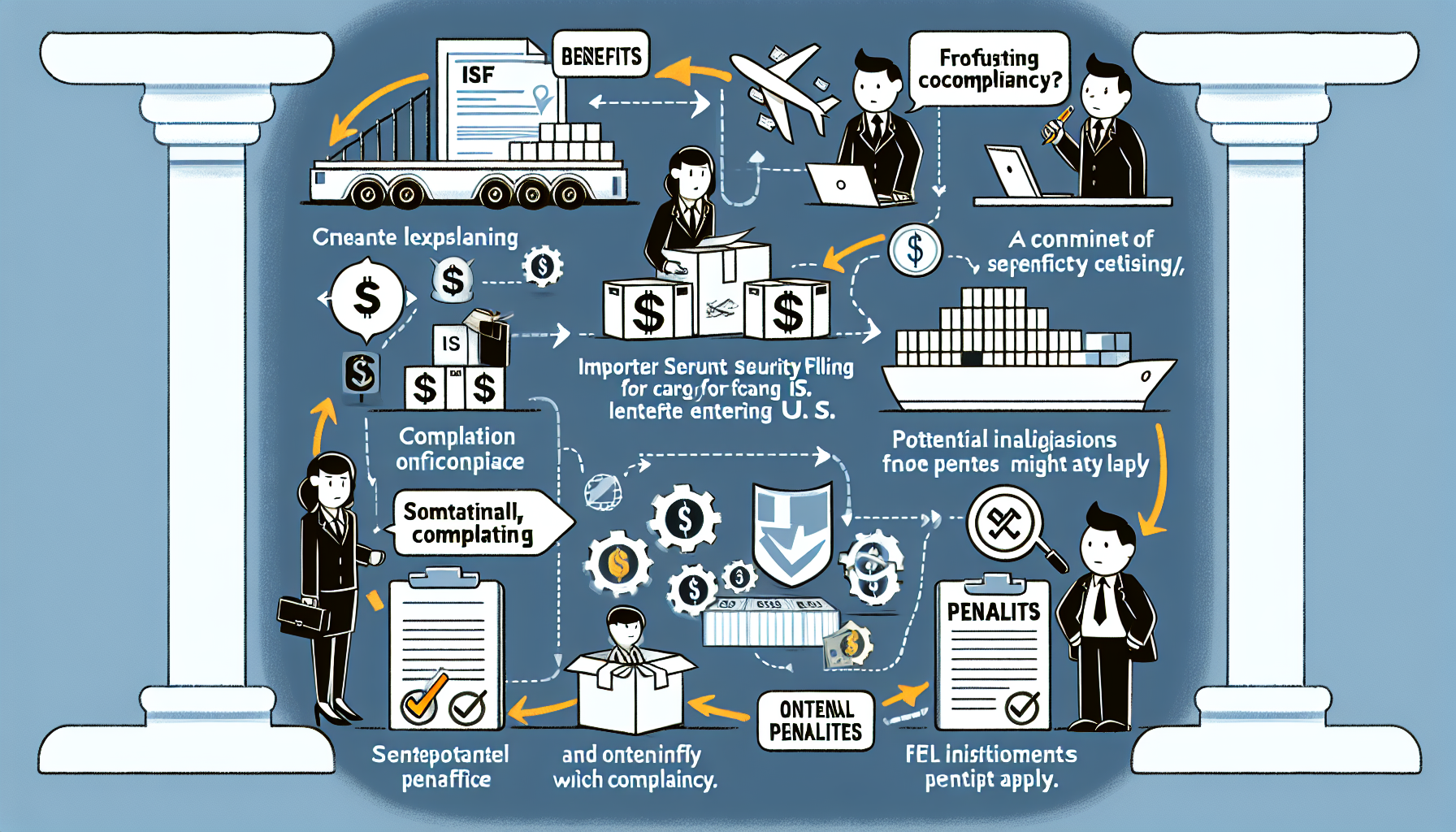
Failure to comply with the ISF requirement can result in significant penalties and fines imposed by CBP. These fines can range from thousands to tens of thousands of dollars, depending on the nature and severity of the violation. By ensuring timely and accurate filing of the ISF, importers can avoid these costly penalties and maintain a good standing with CBP.
Delayed Shipments
Non-compliance with ISF requirements can lead to delays in the clearance process and, consequently, delays in the delivery of goods. CBP may hold shipments for closer examination or additional documentation if the ISF is not filed correctly or is incomplete. Such delays can disrupt supply chains, cause customer dissatisfaction, and have a negative impact on business operations. By filing the ISF accurately and on time, importers can ensure the smooth and timely movement of their cargo.
Seizure of Cargo
In extreme cases of non-compliance with ISF requirements, CBP has the authority to seize and forfeit the cargo. If an importer fails to file the required ISF or provides false or misleading information, CBP can take legal action and confiscate the cargo. This can result in substantial financial losses for the importer and damage to their reputation. By meeting the ISF requirements, importers can avoid the risk of having their cargo seized and ensure the safe arrival of their goods.
Accurate Documentation and Record-keeping
Preventing Delays in Customs Clearance
Accurate documentation and record-keeping are essential for expediting the customs clearance process. By providing complete and correct information in the ISF, importers can help CBP assess the cargo more efficiently and minimize the potential for delays. This includes ensuring accurate descriptions, proper classification of goods, and adequate supporting documents throughout the shipment process.
Required Information
To comply with ISF requirements, importers must provide various information about their cargo, including the shipper’s and consignee’s name and address, the manufacturer or supplier, a complete and accurate description of the goods, the container stuffing location, the consolidator’s name and address, and the country of origin. It is important for importers to gather and verify this information from their supply chain partners to ensure compliance with ISF regulations.
Maintaining Compliance
Compliance with ISF regulations is an ongoing responsibility for importers. It is crucial to maintain accurate records of past filings, track changes in cargo details, and promptly update and amend any necessary information. By implementing robust record-keeping procedures and regularly reviewing and updating their ISF filings, importers can ensure continued compliance and minimize the risk of penalties or delays.
Risk Assessment and Supply Chain Security
Improving Risk Management
ISF plays a key role in improving risk management within the supply chain. By providing advance information, importers enable CBP to assess potential risks associated with incoming cargo. This helps CBP allocate resources effectively, target high-risk shipments, and implement appropriate security measures. By actively participating in the ISF program, importers contribute to enhancing risk management strategies and safeguarding the integrity of the supply chain.
Enhancing Cargo Security
The implementation of ISF serves as an additional layer of security for cargo entering the United States. By requiring importers to provide detailed information about the cargo, CBP can conduct risk assessments and target potential security threats. This, in turn, leads to enhanced cargo security and a reduced risk of unauthorized or illegal activities within the supply chain. By filing the ISF, importers actively contribute to the safeguarding of the supply chain and the protection of national security.
Industry Reputation
Maintaining a good standing with CBP and complying with ISF requirements can positively impact an importer’s reputation within the industry. By consistently meeting the necessary regulations and demonstrating a commitment to supply chain security, importers establish themselves as reliable and trustworthy partners. This can lead to improved relationships with customers, suppliers, and other trade partners, ultimately benefiting their business operations and overall industry reputation.
ISF Cargo for more Information
Preparation for Customs Entry
Facilitating Smooth Customs Clearance
Proper preparation for customs entry is key to facilitating smooth clearance processes. By diligently filing the ISF and providing accurate and complete information, importers help ensure that their cargo meets all necessary requirements for entry into the United States. This includes complying with any additional customs regulations, obtaining any required licenses or permits, and addressing any potential issues or concerns proactively. By being well prepared, importers can streamline the customs clearance process and minimize disruptions to their supply chain.
Advanced Cargo Data (ACD) Program
Importers can further expedite the customs clearance process by participating in the Advanced Cargo Data (ACD) program. ACD allows for the electronic transmission of additional cargo information to CBP in advance, along with the ISF filing. By providing this extra data, importers enable CBP to conduct more thorough risk assessments and streamline the clearance process. Participation in the ACD program helps importers maintain compliance and enjoy faster customs clearance times.
Electronic Manifest System (EMS)
Another critical system that importers can utilize to prepare for customs entry is the Electronic Manifest System (EMS). EMS allows for the electronic submission of cargo manifests to CBP, providing detailed information about the shipment contents, packaging, and carriers involved. By utilizing EMS, importers can ensure accurate and timely transmission of the required cargo data, smooth coordination with customs authorities, and efficient customs clearance processes.
Anticipating Potential Challenges
ISF Amendments and Updates
Importers must stay informed about any amendments or updates to ISF regulations. Customs authorities may revise and refine the requirements periodically based on changing security concerns or industry developments. Importers need to monitor these changes closely and ensure timely compliance to avoid penalties or delays. By staying proactive and adaptable, importers can anticipate and overcome any potential challenges that arise from amendments or updates to the ISF program.
Change in Shipping Itineraries
Changes in shipping itineraries can pose challenges in meeting ISF requirements. If there are any unexpected alterations to the intended route or arrival dates, importers must promptly update their ISF filings to reflect the new information. Failure to do so can result in non-compliance and potential penalties. By maintaining clear communication with supply chain partners and promptly updating the necessary documentation, importers can navigate through changes in shipping itineraries and maintain compliance with ISF regulations.
Impact of Insufficient ISF Filings
Insufficient or inaccurate ISF filings can have severe implications for importers. CBP may hold or examine cargo in more detail, resulting in delays and potential disruptions to the supply chain. Importers may also face penalties or fines for not meeting the required standards. To avoid these negative consequences, importers should ensure they provide complete and accurate information in their ISF filings and promptly address any issues or discrepancies identified by CBP.
Building Trust with Trade Partners
ISF as a Standard Industry Practice
Filing ISF has become a standard industry practice for importers due to its numerous benefits and legal requirements. By consistently meeting ISF obligations, importers demonstrate their commitment to supply chain security and regulatory compliance. This builds trust with trade partners and enhances their reputation within the industry. Adhering to ISF standards not only helps importers meet legal requirements but also establishes a foundation of trust and reliability in their business relationships.
Compliance with Trade Regulations
Filing ISF aligns with broader trade regulations and demonstrates compliance with international standards. Importers who embrace these regulations and actively participate in programs like ISF show their commitment to ethical and legal business practices. This, in turn, fosters trust and confidence among trade partners, suppliers, and customers, leading to long-term business relationships and enhanced cooperation. By prioritizing compliance with trade regulations, importers can create a positive reputation within the industry and position themselves as reliable partners.
Partnering with Customs Brokers
Importers can benefit greatly from partnering with customs brokers to navigate the complexities of ISF compliance. Customs brokers are experts in customs regulations, including the ISF requirements, and can provide invaluable guidance and assistance throughout the filing process. By collaborating with customs brokers, importers can ensure accurate and timely filing of the ISF, optimize their supply chain operations, and mitigate any potential compliance risks. Building strong partnerships with customs brokers is an effective way to strengthen compliance efforts and ensure smooth customs clearance.
Conclusion
Filing ISF for cargo is not only a legal requirement but also a crucial step for ensuring the safe and secure transportation of goods. By providing advance information, ISF enhances supply chain security, prevents illegal activities, and contributes to national security efforts. Importers who comply with ISF requirements avoid penalties and fines, maintain good standing with customs authorities, and facilitate timely customs clearance. Accurate documentation, risk assessment, and collaboration with trade partners further strengthen ISF compliance efforts. By fulfilling their ISF obligations, importers play a critical role in maintaining the integrity of the international trade system and protecting national security interests.
Learn more about ISF 10+2 compliance. Know more for import bond requirements. Feel free to ISF bond and entry assistance. Return to ISF Cargo.