
Are There Any Specific ISF Requirements For Goods That Are Part Of A Consolidated Shipment?
So, you might be wondering if there are any specific ISF requirements for goods that are part of a consolidated shipment. Well, the answer is yes and no. While there aren’t any specific requirements solely for consolidated shipments, the general Importer Security Filing (ISF) requirements still apply. It’s important to ensure that all the necessary information about the goods, such as their origin, shipper, consignee, and any other applicable details, are properly included in the ISF. This helps customs authorities in ensuring the smooth movement of goods and maintaining security. So, let’s dive into the specifics of ISF requirements for consolidated shipments and make sure you’re all set!

ISF Requirements for Consolidated Shipments
Overview of ISF Requirements
When it comes to importing goods, it’s essential to understand the requirements set by U.S. Customs and Border Protection (CBP). One of these requirements is the Importer Security Filing (ISF), which must be submitted to CBP before a shipment arrives in the United States. Consolidated shipments, which include goods from multiple suppliers or manufacturers, have their own set of ISF requirements that importers should be aware of.
Definition of Consolidated Shipment
Before diving into the specific ISF requirements for consolidated shipments, it’s important to understand what a consolidated shipment actually is. A consolidated shipment refers to a scenario where multiple shipments from different suppliers or manufacturers are combined into one shipment for transportation purposes. This is often done to optimize logistics and reduce costs. However, it also means that the ISF requirements are slightly different compared to individual shipments.
ISF Filing Party
Responsibility of the Importer of Record
The Importer Security Filing (ISF) is a crucial document that needs to be filed accurately and on time. The responsibility for filing the ISF rests with the Importer of Record. The Importer of Record is the owner or purchaser of the goods being imported or their authorized agent. It’s important for the Importer of Record to understand their role in the ISF filing process and ensure compliance with CBP regulations.
ISF Filing Party for Consolidated Shipments
In the case of consolidated shipments, the ISF filing party may be different from the Importer of Record. Instead, it is typically the consolidator who takes on the responsibility of filing the ISF. The consolidator is the party responsible for combining multiple shipments into one consolidated shipment. By designating the consolidator as the ISF filing party, it helps streamline the process and ensures that all required information is accurately included in the filing.
ISF Filing Timeline
Timing of ISF Filings
The timing of the ISF filing is crucial to ensure compliance with CBP regulations. For consolidated shipments, the ISF must be filed at least 24 hours before the consolidated shipment is loaded onto the vessel at the foreign port. It is important to note that this is the consolidated shipment level filing deadline and not the individual shipment level deadline.
Late ISF Filings for Consolidated Shipments
Late ISF filings for consolidated shipments can lead to significant consequences, including penalties and potential delays in customs clearance. It is essential to adhere to the 24-hour filing deadline to avoid any complications. To ensure timely filing, effective communication and collaboration between the parties involved, such as the consolidator, the Importer of Record, and any customs brokers or freight forwarders, is crucial.
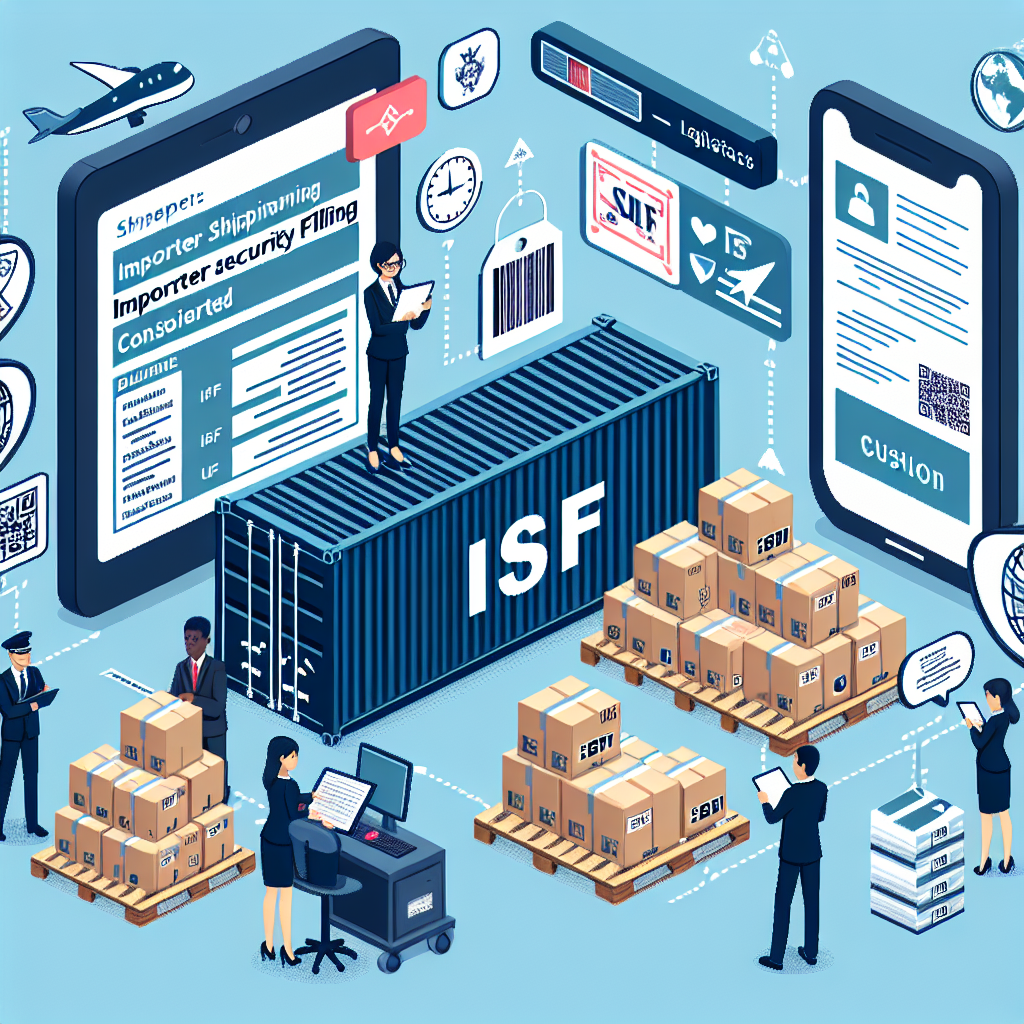
List of ISF Data Elements
General Information
The ISF filing includes a range of data elements that provide CBP with information about the imported goods. This information helps assess potential security risks and ensures compliance with import regulations. General information such as the Importer of Record’s name and address, country of origin, and country of export are all part of the ISF filing.
Modes of Transportation
The ISF filing also requires specific information about the modes of transportation used for the shipment. This includes details about the vessel, such as the vessel name, voyage number, and scheduled arrival date. Additionally, information about the equipment used, such as container numbers or booking numbers, must be provided.
Shipment Information
To accurately identify the shipment, various details need to be included in the ISF filing. These details may include the shipper’s name and address, the bill of lading, and any reference numbers associated with the shipment. This information helps CBP track and identify the goods throughout the import process.
Consolidator Information
Given that consolidated shipments involve multiple suppliers or manufacturers, it is crucial to provide information about the consolidator in the ISF filing. This may include the name and contact information of the consolidator, as well as any unique identifiers associated with their role in the shipment.
Manufacturer/Supplier Information
For consolidated shipments, it is necessary to provide information about the different manufacturers or suppliers involved in the shipment. This includes their names and addresses, ensuring that CBP has visibility into the origins of the imported goods.
Buyer/Owner Information
In addition to the Importer of Record’s information, the ISF filing must also include details about the buyer or owner of the goods. This helps CBP verify the relationship between the Importer of Record and the party responsible for the shipment.
Importer of Record Information
The Importer of Record’s information is a critical component of the ISF filing. In the case of consolidated shipments, it is crucial to clearly identify the Importer of Record and provide their contact information, ensuring proper communication with CBP throughout the import process.
Container Stuffing Location
As part of the ISF filing, the specific location where the container was stuffed with the goods must be provided. This information helps CBP track and trace the origin of the goods, contributing to supply chain security.
Bond Information
The ISF filing also includes details about any bonds associated with the shipment. Bonds provide financial guarantees to CBP for potential duties, taxes, or penalties. The ISF filing must accurately reflect the relevant bond information to ensure compliance with CBP requirements.
Importer Security Filing (ISF) Bond
For consolidated shipments, it is essential to have an ISF bond in place to meet regulatory requirements. The ISF bond guarantees that the Importer of Record complies with ISF filing requirements and any potential penalties that may arise due to non-compliance. It is important to work with a knowledgeable customs broker or freight forwarder to procure the necessary ISF bond.
Additional ISF Requirements for Consolidated Shipments
Master Bill of Lading and House Bill of Lading
Consolidated shipments involve both a master bill of lading and house bill of lading. The master bill of lading covers the entire consolidated shipment, while the house bill of lading provides details about the individual shipments within the consolidation. Both the master bill of lading and house bill of lading need to be accurately reflected in the ISF filing to ensure compliance.
Consolidator’s Bond
As the consolidator takes on the responsibility of the ISF filing, they may also need to obtain a bond to satisfy CBP requirements. This bond serves as a financial guarantee to CBP and ensures that the consolidator fulfills their obligations related to the ISF filing. Working closely with a customs broker or freight forwarder can help navigate the requirements for obtaining a consolidator’s bond.
ISF Amendments or Corrections for Consolidated Shipments
Once an ISF has been filed for a consolidated shipment, it is crucial to monitor the accuracy of the information provided. If any amendments or corrections are necessary, they should be made promptly to avoid potential penalties or delays in customs clearance. Effective communication between all parties involved is essential to ensure timely and accurate amendments or corrections.
ISF Penalties and Non-Compliance
Penalties for Late, Incomplete, or Inaccurate ISF Filings
Failure to comply with the ISF requirements for consolidated shipments can result in penalties and delays in customs clearance. Penalties may be imposed for late filings, incomplete filings, or inaccurate information provided in the ISF. These penalties can range from financial fines to shipment holds or even exclusion from participating in future import transactions. It is crucial to adhere to the ISF requirements to avoid such penalties.
Risk of Non-Compliance for Consolidated Shipments
Given the complexity of consolidated shipments, there is an increased risk of non-compliance with ISF requirements. The involvement of multiple suppliers, manufacturers, and the consolidator itself can make it challenging to ensure all necessary information is accurately provided in the ISF filing. However, by understanding the requirements, working closely with all parties involved, and leveraging the assistance of customs brokers or freight forwarders, the risk of non-compliance can be mitigated.
ISF Cargo for more Information
ISF and Customs Entry
Relationship between ISF and Customs Entry
The ISF filing is often seen as a precursor to the customs entry process. While the ISF focuses on security-related information, the customs entry provides additional details about the imported goods, such as value, classification, and duty payments. The information provided in the ISF is crucial for CBP to assess potential security risks and streamline the customs clearance process.
ISF for In-Bond Shipments and Foreign Trade Zones
For consolidated shipments that involve in-bond movements or are destined for foreign trade zones, additional considerations may apply. In-bond shipments are goods that are transported under CBP supervision without going through formal entry procedures. The ISF requirements for such shipments, as well as shipments destined for foreign trade zones, may differ from standard consolidated shipments. It is important to consult with customs brokers or freight forwarders to understand the specific ISF requirements for these scenarios.
ISF Assistance and Compliance Tools
Customs Brokers and Freight Forwarders
Navigating the ISF requirements for consolidated shipments can be complex, but assistance is available through customs brokers and freight forwarders. These professionals have in-depth knowledge and experience in handling import processes, including ISF filings. They can provide guidance, ensure compliance, and assist with any issues that may arise throughout the import process.
Automated Systems for ISF Filings
To facilitate the ISF filing process, various automated systems are available to importers, consolidators, and their representatives. These systems streamline data submission, validation, and communication with CBP. Utilizing these systems can help ensure timely and accurate ISF filings for consolidated shipments and enhance overall compliance.
Best Practices for ISF Compliance
Ensuring Timely and Accurate ISF Filings
To achieve ISF compliance for consolidated shipments, it is important to establish best practices within your import processes. This includes establishing clear communication channels with all parties involved, sharing accurate and complete information, and maintaining a system for monitoring and updating ISF data. Additionally, utilizing the assistance of customs brokers or freight forwarders can provide valuable expertise in ensuring timely and accurate ISF filings.
Collaboration with All Parties Involved
Collaboration is key when it comes to ISF compliance for consolidated shipments. Strong communication and coordination between the Importer of Record, the consolidator, any customs brokers or freight forwarders, and even the suppliers or manufacturers involved can safeguard compliance and streamline the import process. Regularly sharing updates, ensuring data accuracy, and resolving any issues promptly contribute to successful ISF compliance.
Conclusion
In conclusion, specific ISF requirements exist for goods that are part of a consolidated shipment. Importers of Record and consolidators play crucial roles in ensuring compliance with these requirements. The timely and accurate filing of the ISF, along with adherence to the additional requirements for consolidated shipments, helps mitigate the risk of penalties and delays in customs clearance. By collaborating with all parties involved and leveraging available compliance tools, importers can navigate the complexities of ISF requirements, streamline the import process, and ensure the successful importation of goods within consolidated shipments.
Learn more about CBP ISF regulations. Know more for import bond requirements. Feel free to Customs Filing assistance. Return to ISF Cargo homepage for 10+2 filing.